


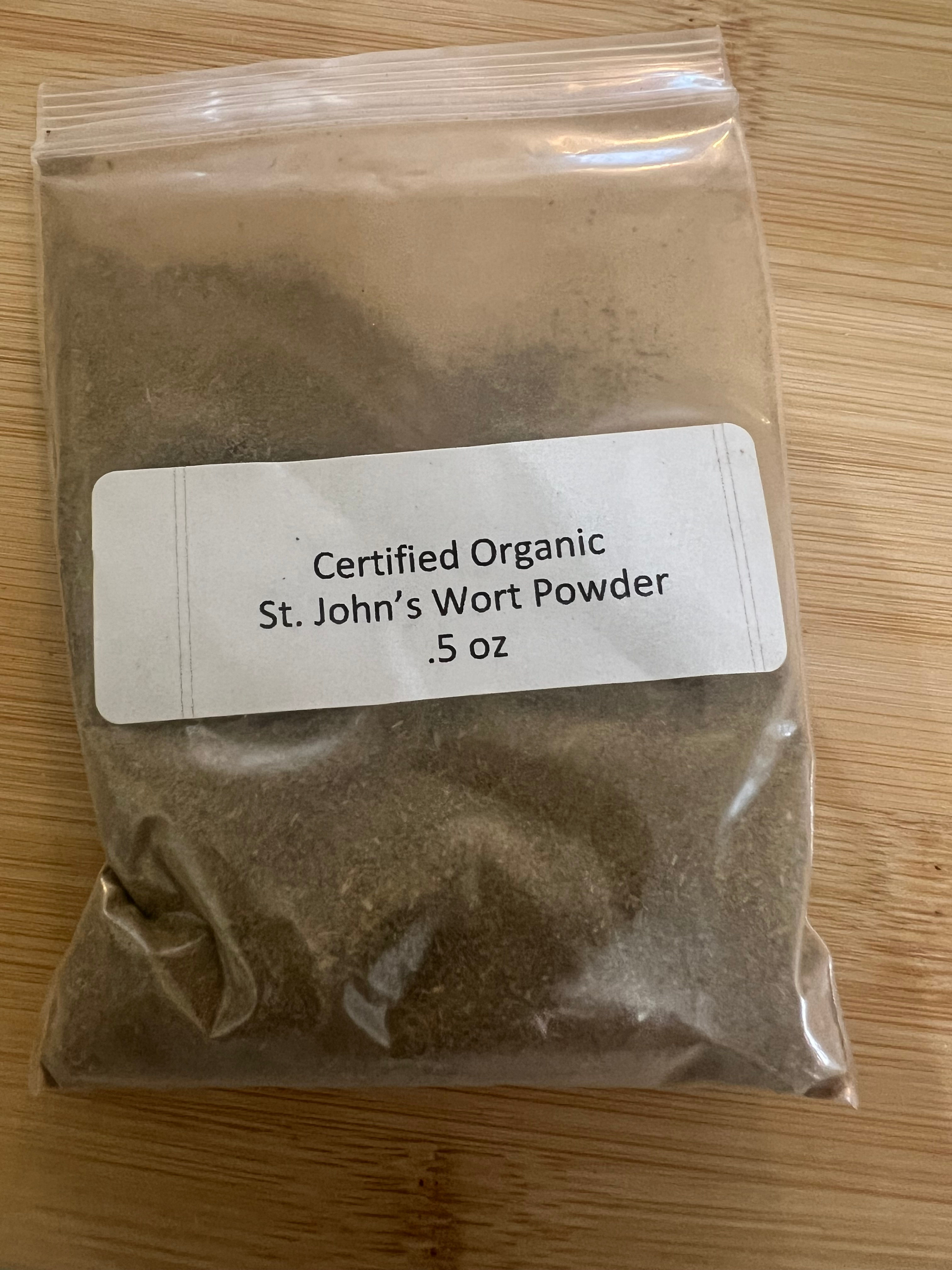
Hypericum perforatum is an herbaceous perennial that grows wild along roadsides and in disturbed meadows. Typical preparations include steeping as tea and as an extract. While the dry material can be used to make an effective oil infusion, the light reactivity of the hypericin is lost in the drying process and causes the oil to not turn a deep red like infusions made from fresh flowers and plants.
St. John's Wort helps promote a healthy mood and emotional balance.*
Hypericum perforatum is one of many species known commonly as St. John's wort, and is the species most commonly associated with herbal preparations. St. John's wort is traditionally harvested near the beginning of the flowering cycle on St. John's Day, which falls annually on June 24th. The flowers continue blooming throughout the summer and may be freely harvested throughout the season.
Considered a holy herb, St. John's wort was employed for a number of folkloric uses during the Middle Ages. It was once believed that the herb helped to protect people from curses, demons, and lightning.
In contrast to its many uses, some countries have identified St. John's wort as an invasive species and noxious weed. Though useful to humans, it can be dangerous to livestock, sprouting up in pastures and causing photosensitivity to the grazing animals that feed upon it. St. John’s wort belongs to the Hypericaceae plant family.
Precautions: Not to be used during phototherapy. Fair-skinned persons should avoid excessive exposure to sunlight during use. May decrease the blood levels of certain orally administered drugs. Consult a qualified healthcare practitioner before taking with medications. We recommend that you consult with a qualified healthcare practitioner before using herbal products, particularly if you are pregnant, nursing, or on any medications.


